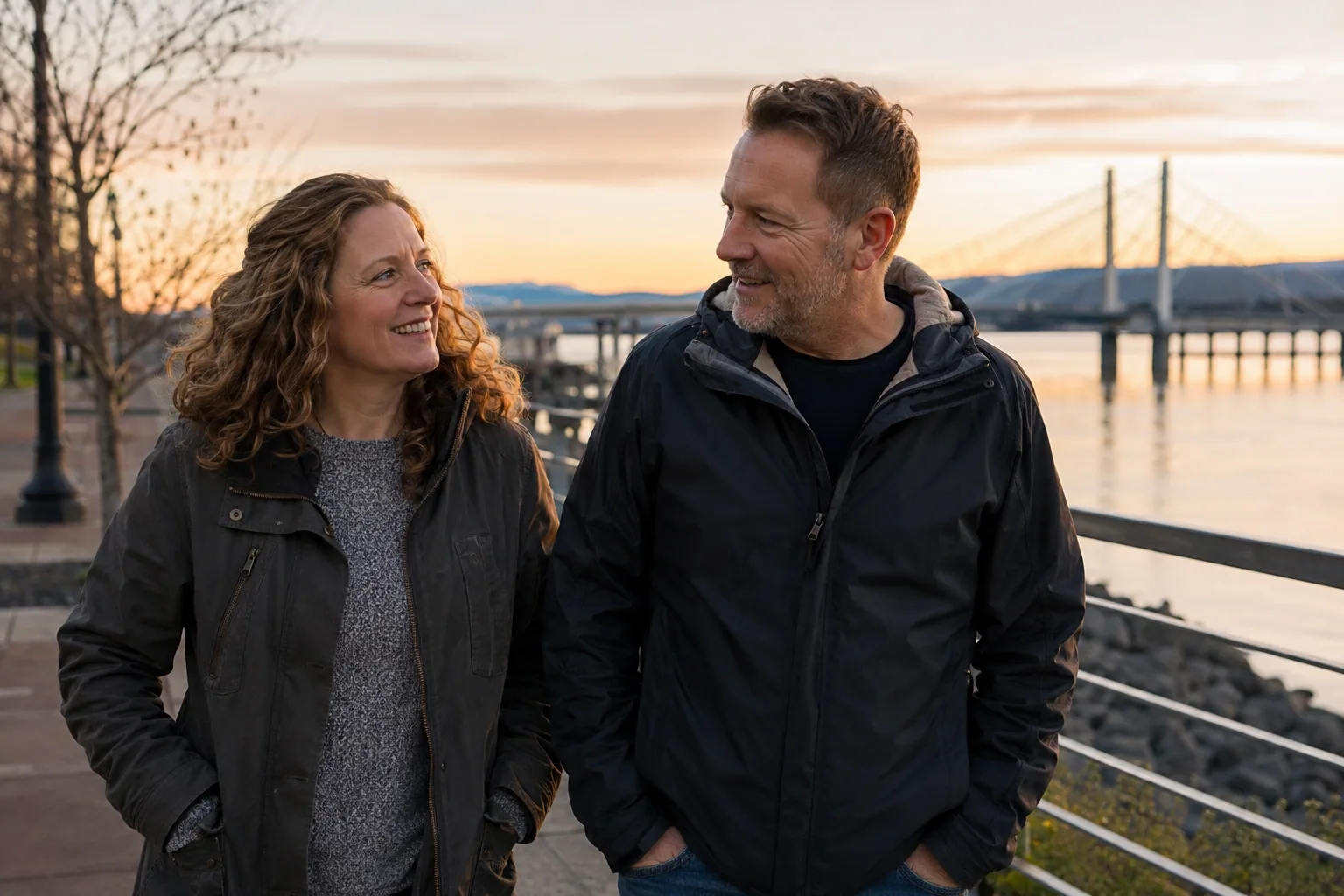
Write Vancouver, Washington, and you have already cleared up one common dating misunderstanding. You mean Clark County and the Columbia River, not the Canadian city. For herpes dating in Vancouver WA, the next useful distinction is whether a connection is genuinely local or depends on repeatedly crossing the river.
You can enjoy Portland and still prefer a relationship based closer to home. You can also be open to someone in Oregon without promising that every invitation will happen on their side. The important part is making that preference visible before it turns into a quiet source of frustration.
Choose a Clark County starting point
Downtown Vancouver is not the only reasonable meeting area. East Vancouver, Salmon Creek, Camas, Washougal, Battle Ground and Ridgefield can all shape a local search. Ask which areas a person already uses and which additional journeys they would comfortably make for dating.
A person who works across the river may find Portland convenient immediately after a shift and prefer Washington at the weekend. Another person may rarely cross at all. Neither routine establishes how much they care about a potential match. It establishes what planning will involve.
One question to ask before suggesting a venue
“Would meeting on the Washington side suit you, or would another area be easier?” is a clear invitation to compare preferences. It does not request an address or ask the other person to justify where they live. Answer it yourself, too. Being flexible should not mean withholding your own needs until you become annoyed.
The cross-river conversation has three parts
Which day?
Do not assume that the journey you made at one hour describes a different day's trip. Compare the time each person would actually leave, the meeting length and the return. If transit matters, use C-TRAN's trip planning and service information rather than building a plan around an unverified connection.
Whose turn?
You do not need a travel ledger for one coffee. If you keep seeing each other, however, notice whether the same person always crosses the river. Fairness can mean alternating locations, sharing the planning or another arrangement you both choose. It should not be a standing assumption that one person's time matters less.
What happens if the plan changes?
A message before the other person starts traveling is very different from a casual cancellation after they have arrived. Agree on how to confirm the meeting, and communicate promptly if work or transport changes it. An apology should usually come with an effort to arrange something else, not an expectation that the traveler will simply try again.
A waterfront address is a setting, not a whole date
The Vancouver waterfront can provide a recognizable place to begin, but it still needs an actual meeting point. Choose a specific public cafe or entrance rather than “somewhere near the pier.” Decide whether you want a seated conversation, a brief walk or both.
Leave the rest open. You do not have to add a meal and an evening event to justify showing up. A simple meeting gives both people room to discover whether conversation works without feeling responsible for entertaining a stranger for hours.
Downtown or Uptown Village may suit someone who prefers a smaller neighborhood setting. A location's reputation cannot tell you whether the particular venue has seating, tolerable noise or hours that fit. Check those details with the venue. Choose a place you can leave independently, rather than using a new date as your only ride home.
Make “close to home” sound welcoming
A bio that begins “No Portland people” may express a real limit but leave very little sense of who you are. An illustrative alternative is, “Vancouver, WA. Clark County is easiest for regular dates, and I would like a steady relationship with room for cooking, conversation and an occasional unplanned afternoon.” It tells a compatible reader what is possible.
If you are open to Oregon, describe that honestly too. You might prefer cross-river dates with notice rather than spontaneous weeknights. It is better to state a modest range you mean than to advertise unlimited flexibility and later feel trapped by it.
For examples of how to combine location with personality, see our Washington dating profiles guide. Keep exact home and workplace details private even when you have enough local information to discuss a meeting.
Look for curiosity beyond the shared diagnosis
It may feel good not to explain why herpes dating matters to you. That relief is a beginning, not a compatibility test. Notice whether the other person wants to know your interests and values, accepts a slower pace and contributes to arrangements.
You can also discover a mismatch without making anyone the villain. Someone may sincerely want a relationship centered on Portland while you want most evenings to stay in Clark County. A polite ending is better than repeatedly arguing about a boundary both people stated at the start.
Health conversations still need honesty before intimacy; shared context does not settle individual risks or consent. Our herpes disclosure article covers that conversation without making every local guide repeat a medical overview.
Let the first plan show you something useful
Suggest a manageable meeting and see whether the other person helps make it work. If they cannot accept, an alternative time or area is a useful sign of interest. If they repeatedly ignore your location preference, you do not need a longer explanation to make it valid.
When you are ready to make a local introduction, lead with Vancouver, Washington, the relationship you want and one ordinary detail someone can respond to. For a connection farther north, our statewide dating guide can help you compare regions without treating the whole state as one neighborhood.